
- Home/
- Buy Clomid at Low Price Online in the United States
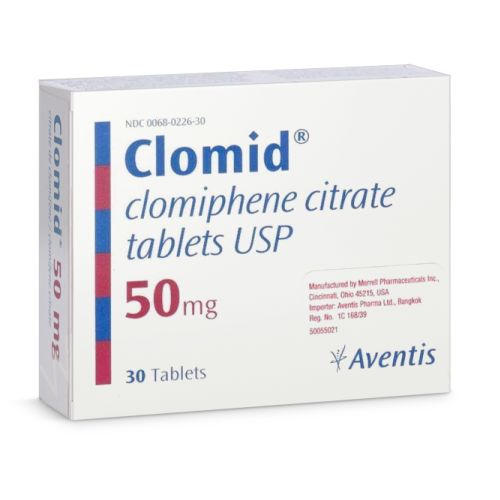
| Medication Name | Clomid |
|---|---|
| Primary Molecule | Clomiphene |
| Intended Use | Stimulation of Ovulation in Female Infertility |
| Formulations Available | Tablets: 50 mg |
| How Fast It Works | Ovulation typically occurs 5–10 days after the last dose |
| Duration of Effect per Cycle | One menstrual cycle |
| Dosing Regimen | Once daily for 5 days per cycle, as directed |
| Requires Doctor’s Prescription | Yes, in United States |
Clomid for Female Infertility: What to Know in the United States
Clomid, with the active ingredient clomiphene, is a medication used to induce ovulation in women experiencing certain types of infertility. It is approved and regulated by the U.S. Food and Drug Administration (FDA) and is available by prescription throughout the United States for women seeking support in achieving pregnancy. Clomid offers a widely used and established approach for women whose difficulty conceiving is related to ovulation disorders.
You Are Not Alone: Understanding Female Infertility in the United States
Infertility is a common challenge, not a rare exception. According to the Centers for Disease Control and Prevention (CDC), 2022, about 1 in 5 married women aged 15 to 49 with no prior births in the U.S. are unable to get pregnant after one year of trying. Many more face difficulties related to irregular ovulation, which is one of the most treatable forms of infertility. The emotional impact is real, but it is shared by millions—and importantly, there are proven, accessible options for treatment. Recognizing this is the first step toward moving from uncertainty to action.
How Clomid Addresses Ovulation Problems: The Mechanism and What to Expect
Clomid works by influencing the hormonal signals that trigger ovulation—the release of an egg from the ovary. In women with ovulatory dysfunction, the brain may not produce enough of the hormone (FSH) needed to mature and release an egg each cycle. Clomiphene, the active component in Clomid, tricks the body into sensing low estrogen levels. This prompts the brain (specifically, the pituitary gland) to increase production of FSH (follicle-stimulating hormone) and LH (luteinizing hormone). As a result, the ovaries are stimulated to develop and release a mature egg.
What does this mean for you? Practically, most women who respond to Clomid will ovulate about 5–10 days after completing the 5-day course. Some may experience mild symptoms such as hot flashes or mood swings, which typically resolve after the medication is stopped. If ovulation occurs, the chance of conception increases during that cycle. According to the American Society for Reproductive Medicine (ASRM), 2021, approximately 70–80% of women with ovulation disorders will ovulate with Clomid, and around 30–40% will achieve pregnancy within six cycles of use.
Is Clomid the Right Choice? Life Situations and Suitability
| Your Situation | Is Clomid Appropriate? | Reason/Notes |
|---|---|---|
| Irregular or absent periods (anovulation), no other medical issues, trying to conceive for over a year | Yes | Clomid directly addresses ovulation problems, which are often the cause in this scenario |
| Diagnosed with polycystic ovary syndrome (PCOS), otherwise healthy | Yes, often first-line | Clomid is commonly used as initial therapy for ovulation induction in PCOS |
| Male partner has infertility factors (low sperm count/motility) | No, not alone | Clomid does not address male infertility; evaluation/treatment of both partners is important |
| Previously tried Clomid for six cycles without pregnancy | Generally, no | If pregnancy hasn’t occurred after 6 cycles, switching therapies or further evaluation is recommended |
| Blocked fallopian tubes or severe endometriosis | No | Clomid only works if the fallopian tubes are open and the uterus is receptive |
| Regular periods but unexplained infertility (all tests normal) | Maybe | Clomid is sometimes tried, but success rates are lower; discuss with your doctor |
As seen above, Clomid is highly effective in women whose infertility is due to problems with ovulation—especially those with PCOS or irregular cycles. It is not suitable if there are anatomical issues (like blocked fallopian tubes) or if male factor infertility is present. The decision should always involve a fertility specialist to ensure the underlying cause is properly addressed.
Taking Clomid: Practical Guidance for Everyday Situations
- How to take it: Clomid is usually started on day 3, 4, or 5 of your menstrual cycle, one tablet daily for 5 days, as directed by your doctor.
- With or without food? Both are acceptable; taking with food may minimize stomach upset.
- What if you miss a dose? Take it as soon as you remember if it’s the same day; if a full day is missed, skip and continue on schedule—never double up. Notify your doctor if more than one dose is missed in a cycle.
- Monitoring: Your doctor may recommend ultrasounds or hormone testing to check if ovulation occurs. Tracking ovulation at home (e.g., ovulation predictor kits) can also help.
- If it doesn’t work this cycle: Up to 3–6 cycles may be tried, adjusting dosage if needed. If ovulation does not occur, or if pregnancy is not achieved after 6 cycles, further evaluation or different treatments are usually needed.
- Normal experiences: Mild bloating, headaches, or mood changes are common and usually temporary. If you experience severe pain or vision changes, stop the medication and contact your doctor promptly.
Clomid is not taken continuously. Each cycle is evaluated before repeating, and close monitoring by your healthcare provider ensures safe and effective use. If you have questions about timing, combining with other therapies, or travel plans, discuss these with your provider in advance—they can offer personalized strategies.
Who Should Not Use Clomid?
Clomid is contraindicated in certain conditions because the risks outweigh potential benefits or because it would be ineffective. Below, the reason for each major contraindication is explained:
- Liver disease (active or history): Clomiphene is metabolized in the liver. Impaired liver function increases the risk of toxicity.
- Unexplained abnormal uterine bleeding: This could mask a more serious underlying problem (such as cancer) that must be excluded before starting therapy.
- Ovarian cysts unrelated to polycystic ovary syndrome: Clomid may enlarge existing cysts, raising the risk of complications.
- Pregnancy: Clomid should not be used if you are or may already be pregnant because it will not improve outcomes and poses unnecessary risk.
- Known hypersensitivity to clomiphene or any ingredient in Clomid: Allergic reactions, though rare, can be serious.
- Pituitary or ovarian tumors: Hormone-sensitive tumors could worsen with Clomid-induced hormonal changes.
Always provide your full medical history and current medication list to your provider before starting Clomid. If you’re unsure about your suitability, a consultation with a reproductive endocrinologist is the safest approach.
Potential Side Effects: What to Expect and When to Seek Help
- Mild, common side effects: Hot flashes, abdominal discomfort, breast tenderness, headaches, and mood changes. These typically resolve after stopping Clomid.
- Uncommon, but important to know: Visual symptoms (blurring, flashes of light); these require immediate discontinuation and prompt medical review as they may indicate rare but serious reactions.
- Rare but serious: Ovarian hyperstimulation syndrome (OHSS)—marked by severe abdominal pain, rapid weight gain, shortness of breath, or swelling. Multiple pregnancy (twins or more) occurs in about 8–10% of Clomid pregnancies, according to ASRM, 2021.
If you experience sudden severe pain, breathing difficulty, or symptoms of an allergic reaction (hives, swelling, trouble breathing), seek emergency care. In the United States, call 911 in any life-threatening situation. For suspected poisoning or overdose, contact the Poison Help line at 1-800-222-1222 (American Association of Poison Control Centers).
Most side effects are temporary and manageable, but any persistent or severe symptom should be addressed with your healthcare provider.
Interactions With Other Medications and Supplements: What to Know
Clomid has few clinically significant drug interactions, but it is important to inform your doctor of all medications and supplements you take. Notably:
- Hormonal therapies: Use of other fertility drugs (like gonadotropins) can increase the risk of OHSS; only combine under specialist supervision.
- Herbal supplements: Some, such as St. John’s Wort, may alter hormone metabolism and could affect Clomid’s action or side-effect profile.
- Alcohol: There is no direct contraindication, but heavy alcohol use can impair fertility and is best avoided during treatment.
Always mention new or over-the-counter products to your fertility team, as minor interactions may not be well-documented but could still impact outcomes.
Clomid vs Other Fertility Medications: Honest Comparison and Alternatives
| Option | Best For | Limitations/Notes |
|---|---|---|
| Clomid (Clomiphene) | Women with ovulation disorders, especially PCOS, open tubes, normal uterus | Lower cost, oral, widely available; less effective if other infertility factors present |
| Letrozole (Femara) | PCOS, Clomid-resistant cases, concerns about endometrial lining | Some studies show higher pregnancy rates in PCOS; not FDA-approved for infertility but widely used “off-label” |
| Gonadotropins (injections) | Clomid/letrozole failures, more complex cases, IVF preparation | Higher cost, higher multiple pregnancy risk, requires close monitoring |
| Natural cycle monitoring | Regular cycles, unexplained infertility, minimal intervention | Lower success rates in ovulatory disorders; may be used before medications |
| IVF (in vitro fertilization) | Severe male factor, tubal blockage, failed prior therapies | Most invasive and expensive; highest success in select cases |
Clomid remains the most accessible and cost-effective first-line medication for women with ovulation-related infertility in the U.S., especially when there are no complicating factors. Letrozole is increasingly used for similar situations and may be slightly more effective for certain women with PCOS, but is not officially approved for infertility. Injectable gonadotropins and IVF are reserved for more complex or resistant cases, and carry higher risks and costs. Each option requires individual assessment with a fertility specialist.
Pricing, Access, and What to Expect When Buying Clomid in the United States
| Cost Component | Typical Amount (USD) | Context/Notes |
|---|---|---|
| Physician Consultation | $100–$350 | In-person or telemedicine; may be covered by insurance |
| Prescription Fee (if separate) | $0–$50 | Varies by state and clinic |
| Clomid Tablets (5-day course, 50 mg x 5) | $9–$50 (generic); $120–$150 (brand) | Price depends on pharmacy, insurance, dosage |
| Delivery (if ordering online) | $0–$15 | Standard shipping; some online pharmacies may offer free delivery |
| Total (1 cycle, typical) | $109–$565 | Lowest: generic + telemedicine; Highest: brand + in-person + delivery |
Clomid is available as both a brand-name and generic medication in the U.S., with pharmacies and some licensed telemedicine platforms offering legitimate options. A prescription is legally required due to federal regulations—even if some online sites claim otherwise, these are not officially sanctioned. Insurance may partially cover the consultation and medication, but this varies.
When purchasing, expect to receive a blister pack or bottle with tablets, full instructions, and mandatory labeling. Always confirm that the pharmacy is licensed and that you are receiving genuine medication. The U.S. FDA maintains a searchable database of approved pharmacies and products; using this resource can help avoid counterfeit or unapproved sources.
Frequently Remaining Questions: Clarifications on Clomid and Fertility Treatment
- Can I use Clomid for more than six cycles if I haven’t conceived? Most fertility specialists recommend stopping after six cycles because success rates decrease and risks (such as ovarian cysts or overstimulation) increase beyond this point. Other options are generally considered after this time.
- Does Clomid increase the risk of ovarian cancer? Current evidence suggests that short-term use (up to six cycles) does not significantly increase risk. Long-term safety after extended use is less clear, which is another reason for limiting the number of cycles.
- Is monitoring always necessary? While some women will ovulate and conceive without intensive monitoring, periodic ultrasounds or hormone tests can help optimize ovulation timing and minimize risks. Your provider will tailor the approach to your medical history and preferences.
- Can men use Clomid for fertility? Clomid is sometimes prescribed “off-label” for certain forms of male infertility, but this use has different indications, dosing, and monitoring. Men should only use it under the supervision of a reproductive urologist.
- If I become pregnant while on Clomid, do I continue the medication? No. Stop taking Clomid immediately if you suspect or confirm pregnancy, and inform your doctor. Continuing the drug during pregnancy is not recommended.
For complex or persistent questions, a board-certified reproductive endocrinologist can provide individualized, up-to-date guidance. The FDA and CDC both offer resources for understanding infertility treatments and medication safety. Your path forward should be informed by both your unique medical situation and the most trusted sources available.